Category: Turbocharger
Guides covering turbocharger diagnostics, repair, and maintenance across a range of vehicles and turbo systems. Topics include common failure points like wastegate and actuator faults, boost leaks, oil starvation and coking, turbo whine and other warning signs, as well as step-by-step diagnostics using OBD-II scanners and platform-specific tools like VCDS.
Whether you’re chasing a boost pressure code, trying to diagnose a failing wastegate, or deciding whether to repair or replace a turbo, you’ll find practical, hands-on write-ups here — based on real diagnostic and repair work rather than generic explanations.
Inside an IHI IS12 Turbocharger: What It Is, How It Works, and How It Comes Apart
A turbocharger is a small, fast-spinning device that gives an engine more air. This article explains what one is and what each part does. It also shows what happens when someone takes one apart and examines it. Which IHI IS12 turbocharger this article covers The unit described here is the IHI IS12. You find it…
Written by
VW SportWagen P00B700 and P013100: VCDS Diagnosis Guide for the EA888 1.8T
On October 15, 2026, I was travelling from Manhattan New York to Boston in my 2018 Volkswagen SportWagen 1.8T (EA888 Gen 3) when the check engine light came on and the temperature gauge climbed almost to the red zone. On Saturday, October 17, I scanned the car with my VD700 diagnostic tool. It recorded two…
Written by
IS20 Turbocharger Shaft Play: What’s Normal and When Should You Worry?
You remove the air intake pipe from your Volkswagen Golf GTI, Golf SportWagen, or another EA888-equipped car. Then you gently move the compressor wheel of the IS20 turbocharger and feel the shaft move from side to side. Is the turbocharger worn out? Not necessarily. A journal-bearing turbocharger can show some radial movement when the engine…
Written by
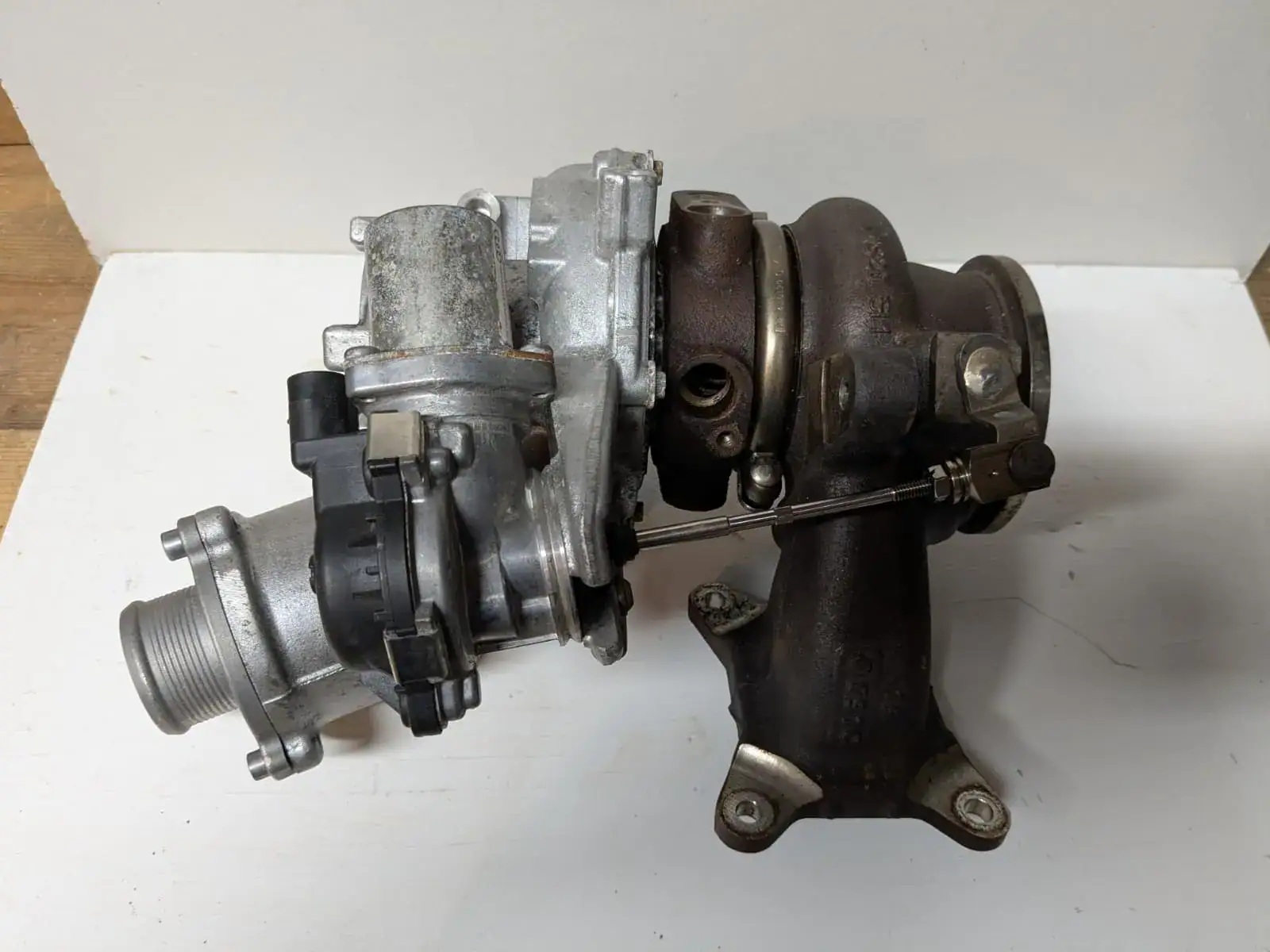
EA888 Gen 3 Water Pump Explained: How It Works, Failure Points and Diagnosis
If you own a Volkswagen or Audi with an EA888 Gen 3 1.8T or 2.0T engine, the water pump is one cooling-system component worth understanding before you start swapping parts. At first glance, the assembly looks confusing. It packs a mechanical coolant pump, an electronically controlled actuator, gears, rotary valves, sensors, and an emergency thermostat…
Written by
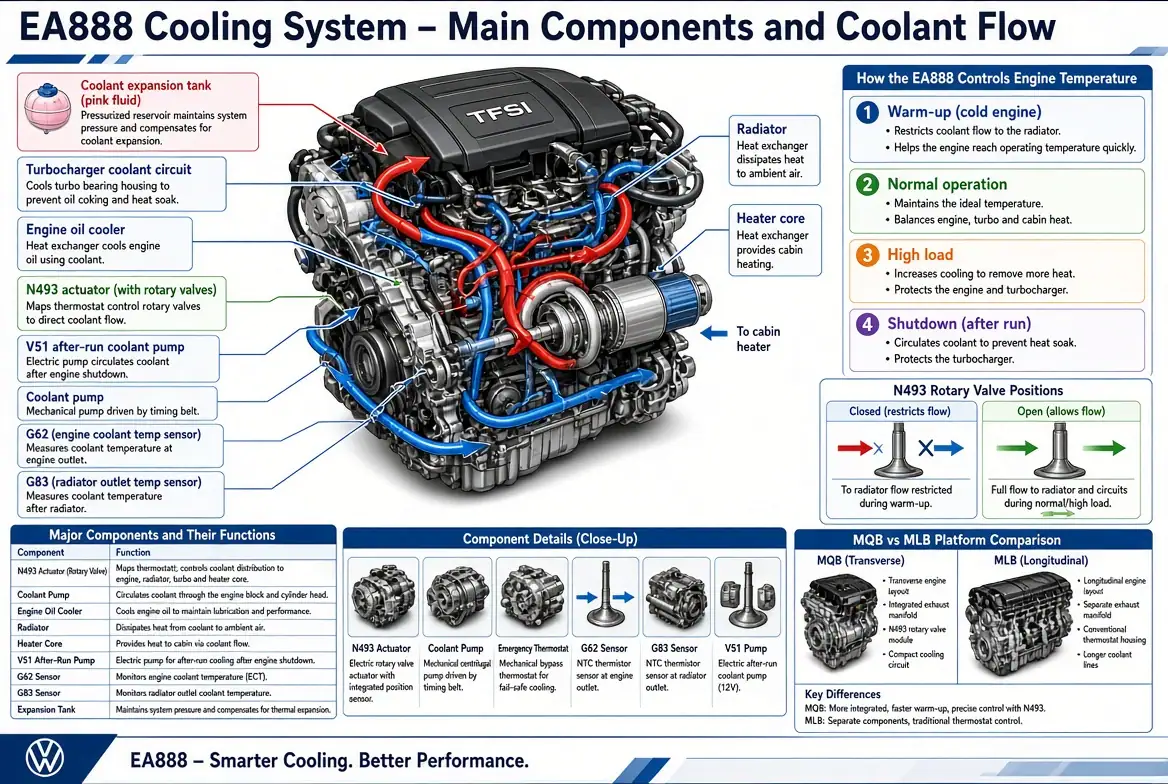
EA888 Cooling System Explained: How Volkswagen Controls Engine Temperature
Detailed technical illustration of the EA888 Gen 3 engine showing main cooling system components with color-coded coolant flow (red for hot, blue for cooled). Labels include N493 actuator with rotary valves, V51 after-run pump, G62 and G83 temperature sensors, radiator, heater core, expansion tank, oil cooler, and turbocharger circuit. Right panel explains the four temperature-control…
Written by

P0234 Diagnosis and Repair: How I Troubleshoot Turbocharger Overboost on the VW/Audi EA888 Engine — Part 2
In Part 1, I explained what P0234 means and how the Volkswagen/Audi EA888 engine controls turbocharger boost. I explained that: P0234 does not automatically mean the turbocharger is damaged. The fault simply tells me that: Actual boost pressure is higher than the ECU expected. The challenge is identifying why the ECU cannot control boost correctly.…
Written by
P0234 Explained: Diagnosing Turbocharger/Supercharger Overboost Condition on the VW/Audi EA888 Engine — Part 1
In this post, I will explore one of the less understood turbocharger-related DTC codes reported by Volkswagen and Audi owners: P0234 — Turbocharger/Supercharger “A” Overboost Condition. At first glance, this code sounds like a serious turbocharger failure. Many vehicle owners immediately assume that the turbocharger must be replaced because the engine is producing too much…
Written by
P0299 Explained: Diagnosing Turbo Underboost on Volkswagen and Audi EA888 Engines (Part 3)
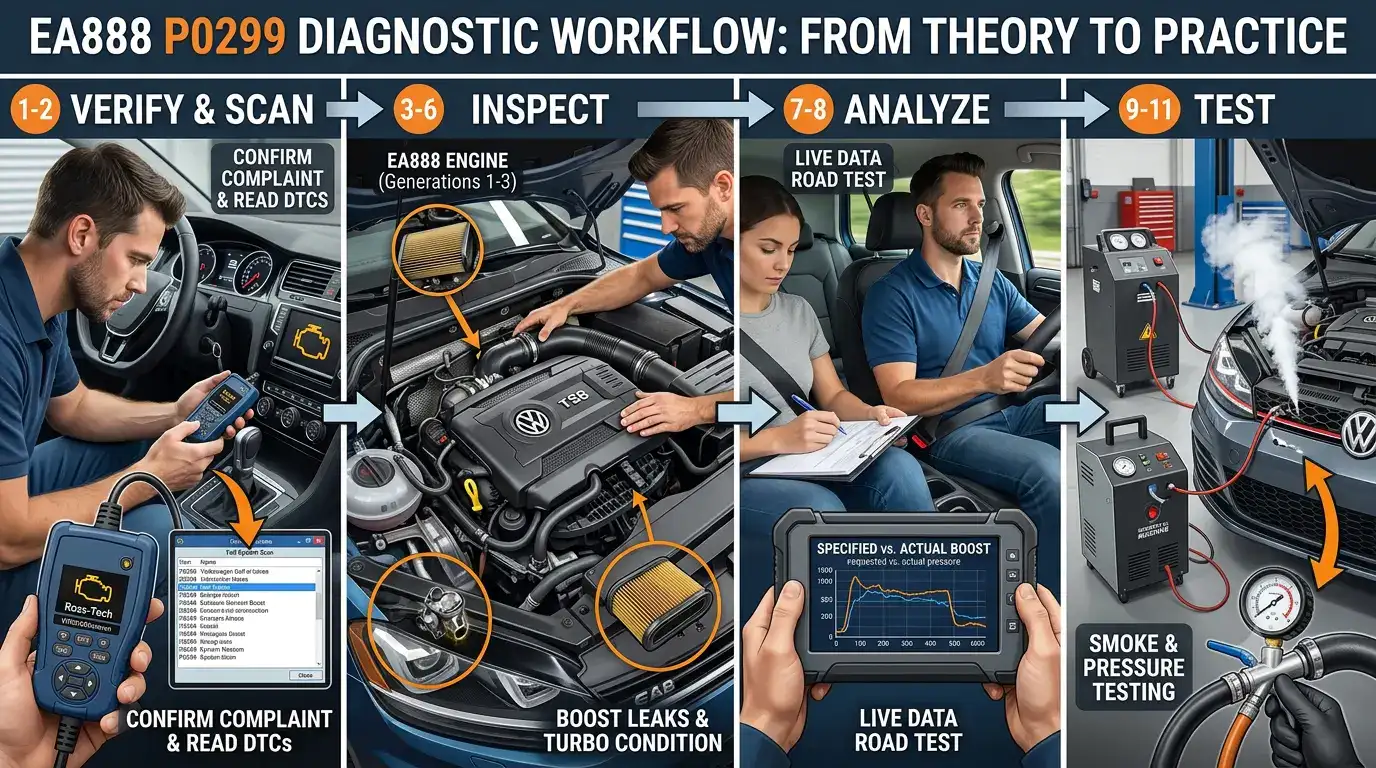
In Parts 1 and 2, we explored how the EA888 engine turbocharging system works and examined the most common causes of Diagnostic Trouble Code (DTC) P0299. In this part, we’ll move from theory to practice by following a professional diagnostic workflow. Rather than replacing parts based on guesswork, you’ll learn how to collect evidence using…
Written by

P0299 Explained: Diagnosing Turbo Underboost on Volkswagen and Audi EA888 Engines (Part 2)
In Part 1, we explained how the EA888 turbocharging system works and how the Engine Control Module (ECM) determines when to set Diagnostic Trouble Code (DTC) P0299. In this part, we’ll walk through the most common causes of turbo underboost — from boost leaks, diverter valve failures, and charge air system problems, to wastegate actuator…
Written by
P0299 Explained: Diagnosing Turbo Underboost on Volkswagen and Audi EA888 Engines (Part 1)
If you own a turbocharged Volkswagen or Audi powered by an EA888 engine, few diagnostic trouble codes are as common—or as misunderstood—as P0299: Turbocharger/Supercharger Underboost Condition. The first time this code appears, many owners assume the worst: “My turbocharger has failed.” That assumption often leads to unnecessary repairs and expensive parts replacements. In reality, a…
Written by